

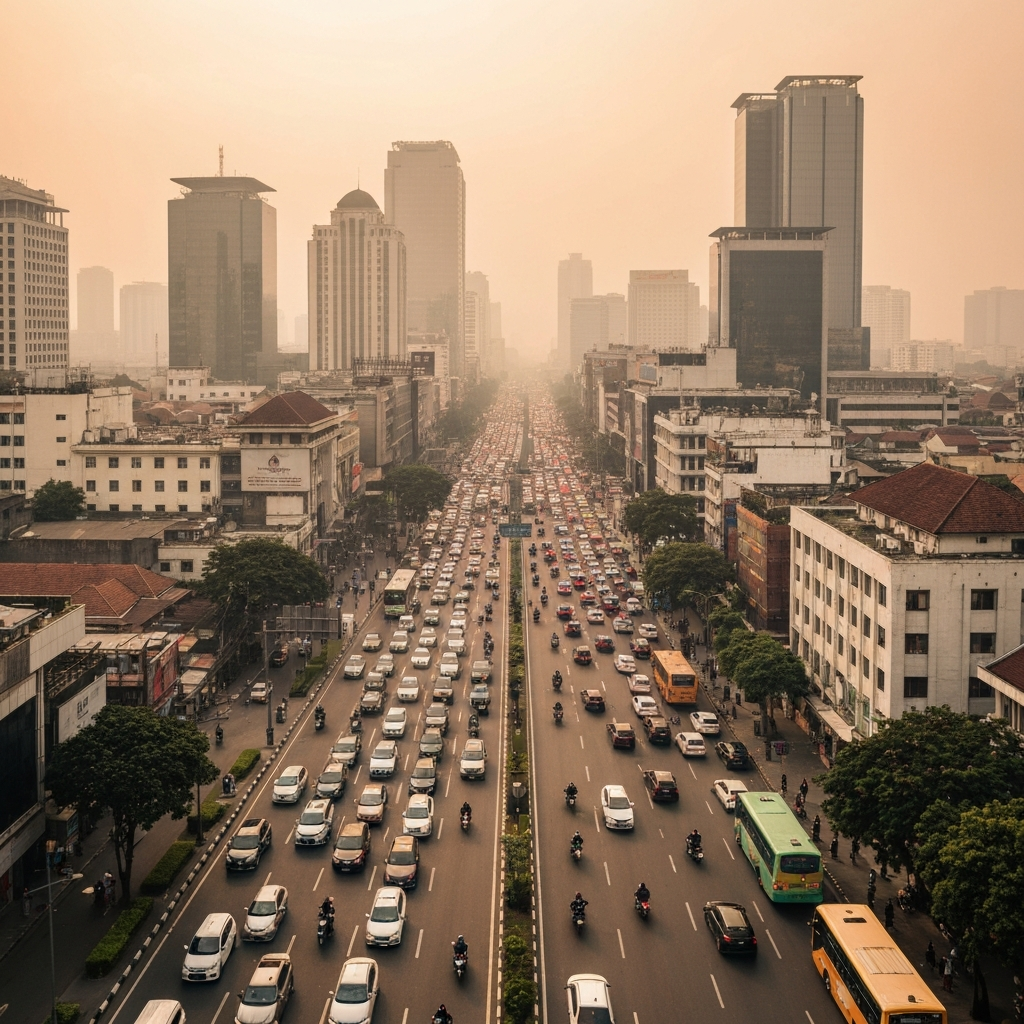
Jakarta, Indonesia’s bustling capital, is grappling with a series of environmental challenges that threaten its sustainability and the well-being of its residents. Key among these are air pollution, frequent flooding, and rapid land subsidence.
Air Pollution
The city’s air quality has been a growing concern, with transportation identified as a major contributor. As of 2018, Jakarta had approximately 20 million motorized vehicles, including 13 million motorcycles, numbers that have continued to grow at a rate of nearly 5% per year. This surge in vehicular traffic significantly contributes to the city’s air pollution levels. Additionally, industrial activities and coal-fired power plants surrounding the city exacerbate the situation, leading to health issues among the population. [Source: WRI Indonesia]
Flooding and Land Subsidence
Jakarta’s geographical position on a low-lying alluvial plain, intersected by thirteen rivers, makes it inherently susceptible to flooding. The situation is worsened by rapid urbanization and extensive groundwater extraction, leading to land subsidence. Some areas in North Jakarta have been sinking by several centimeters per year, with estimates suggesting that as much as 40% of the city now sits below sea level. This subsidence, combined with rising sea levels due to climate change, increases the risk of severe flooding events. [Source: NASA Earth Observatory]
Water Pollution
Domestic waste disposal practices have led to significant pollution in Jakarta’s rivers. Household waste and open defecation are primary contributors, resulting in many rivers being classified as heavily polluted. Efforts to improve sanitation and waste management are ongoing but require more robust implementation to see substantial improvements. [Source: Kompas]
Moving Forward
Addressing these environmental challenges necessitates a coordinated approach involving government agencies, local communities, and international partners. Enhancing public transportation to reduce vehicular emissions, implementing stricter regulations on industrial pollution, and investing in sustainable urban planning are crucial steps. Additionally, promoting public awareness and community participation can foster a collective effort towards a cleaner and more resilient Jakarta.
By acknowledging these issues and working collaboratively, Jakarta can pave the way for a sustainable future, ensuring the health and safety of its residents and preserving the city’s rich cultural heritage.