

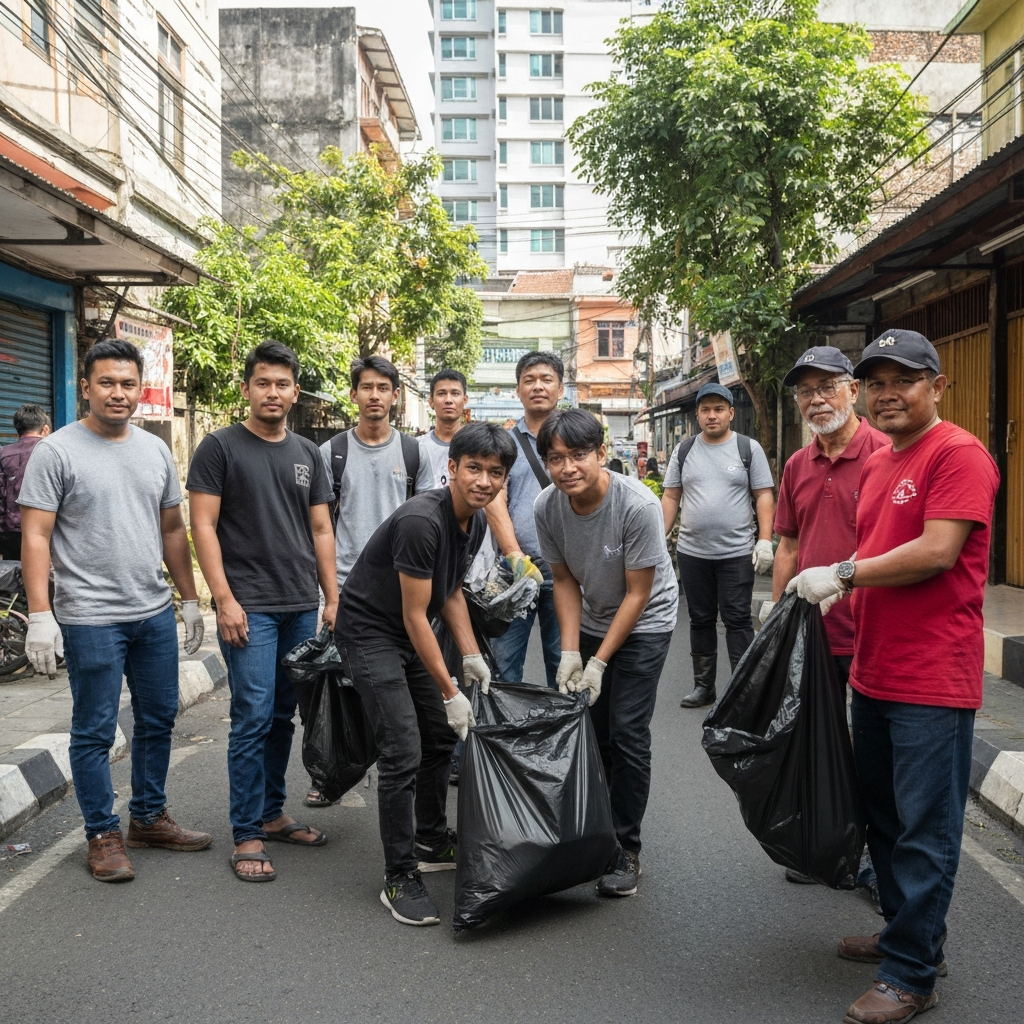
Jakarta, Indonesia’s bustling capital, faces numerous environmental challenges, including air pollution, inadequate sanitation, and waste management issues. In response, local communities have initiated various programs to combat these problems and enhance the city’s livability.
Combating Air Pollution
Air pollution remains a significant concern for Jakarta’s residents. A study by Vital Strategies highlighted that while there is broad support for clean air policies, structural barriers such as limited access to public transport and green spaces persist. To address this, the city has implemented Low Emission Zones (Kawasan Rendah Emisi/KRE) and is promoting community participation to ensure the success of these initiatives. Source
Improving Sanitation
Sanitation is another pressing issue. Reports indicate that approximately 119,528 households in Jakarta lack septic tanks, leading to waste being discharged directly into open drains and rivers. This practice poses significant health risks and environmental degradation. Efforts are underway to provide proper sanitation facilities and educate residents on the importance of hygienic waste disposal. Source
Addressing Waste Management
Waste management challenges are evident in areas like Cilincing, North Jakarta, where pollution has severely impacted local fishing communities. Industrial waste has been reported to flow into Jakarta Bay, killing fish and disrupting livelihoods. Community leaders have raised concerns and are advocating for stricter regulations and better waste management practices to protect both the environment and their economic interests. Source
Community-Led Solutions
Grassroots organizations are at the forefront of these environmental efforts. For instance, the Sapu Bersih (SABER) community patrols Jakarta’s roads to remove hazardous “nail traps”—sharp metal objects suspected to be deliberately scattered to cause tire punctures. Since its inception in 2010, SABER has collected tons of metal debris, showcasing the community’s proactive spirit in ensuring public safety. Source
These community-driven initiatives underscore the resilience and determination of Jakarta’s residents to address environmental challenges. While significant progress has been made, continued collaboration between the government and local communities is essential to create a cleaner, healthier, and more sustainable urban environment.