

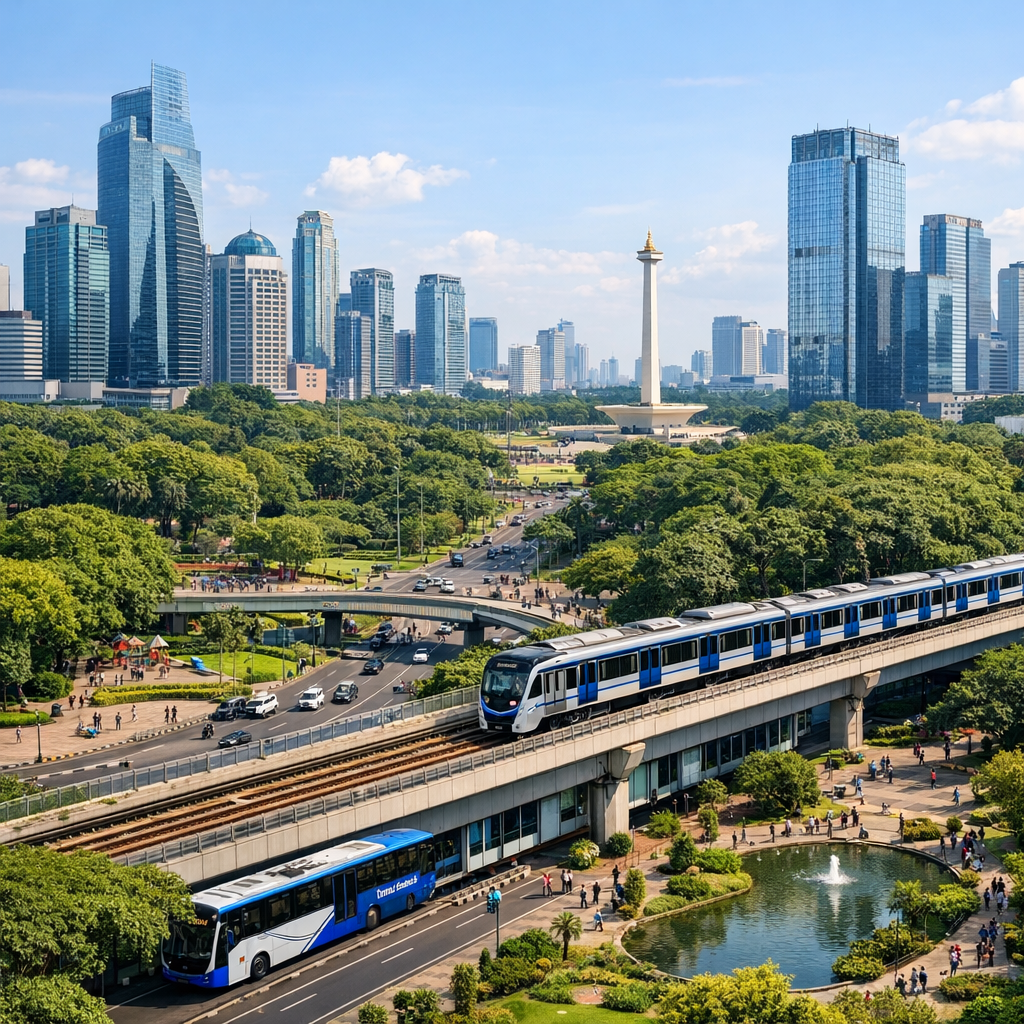
Jakarta, as Indonesia’s bustling capital, faces significant environmental challenges, including air pollution, waste management issues, and the impacts of climate change. In response, the city has launched several initiatives aimed at fostering a more sustainable urban environment.
Low Emission Zones to Improve Air Quality
To address air pollution, Jakarta has implemented Low Emission Zones (LEZs) in various parts of the city. These zones restrict the entry of high-emission vehicles, encouraging the use of public transportation and eco-friendly alternatives. Studies indicate that widespread implementation of LEZs could reduce PM2.5 concentrations by up to 30%, significantly improving air quality and public health.
Advancements in Waste Management
The city has also made strides in waste management by establishing Refuse Derived Fuel (RDF) plants in Bantargebang and Rorotan. These facilities process waste into alternative fuel, reducing landfill dependency and mitigating environmental pollution. Additionally, Jakarta promotes community-based waste management through the Samtama program, encouraging residents to engage in waste sorting and recycling at the neighborhood level.
Climate Action and Sustainable Development
Jakarta is committed to achieving net-zero emissions by integrating carbon economic values into its policies. This approach aims to reduce greenhouse gas emissions while fostering economic growth. The city has also expanded public parks and green corridors to enhance urban biodiversity and improve residents’ quality of life.
These initiatives reflect Jakarta’s dedication to environmental sustainability. However, continued collaboration among the government, private sector, and community is essential to address ongoing challenges and ensure a greener future for the city.