

By Nur Rahayu
In Jakarta’s ever-shifting property market, several patterns currently emerging are worth tracking—particularly affordable housing expansion, transit-oriented development (TOD), and buyer behavior in high-rise vs landed properties.
Affordable Housing Expansion (Rusun) Gains Momentum
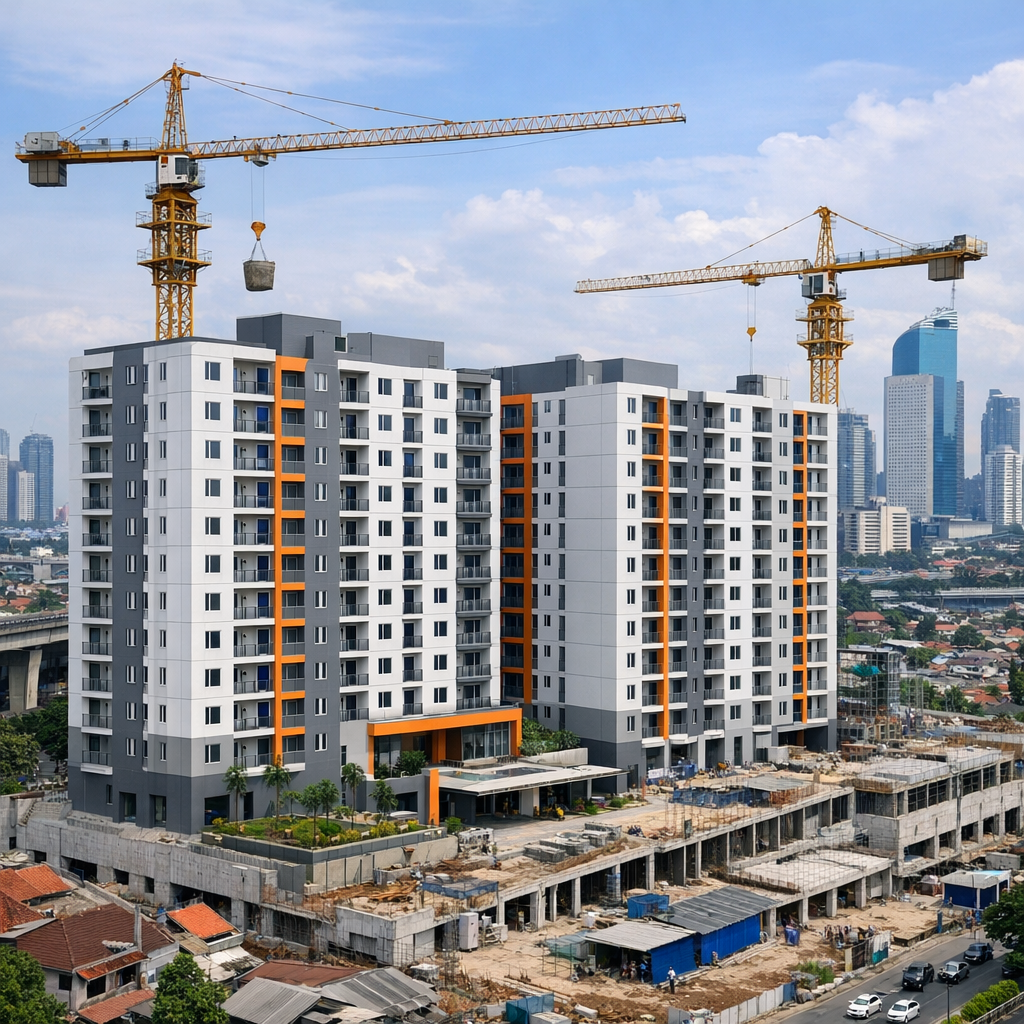
The Jakarta provincial government plans to build nearly 12,000 new low-cost apartment units (rusun) beginning in 2027 across 11 locations, including Marunda and Rorotan in North Jakarta. These are part of the broader national target of three million homes, intended to reduce housing shortages for lower-income residents.
Another key initiative is the proposed rusun project on 1.61 hectares in Senen, targeting relocation of riverbank communities, with commitment from both central and local government and BUMN stakeholders.
Transit-Oriented Development and Mixed-Use Integration
TOD projects are multiplying, providing integrated housing, retail, and public transport access. Notable developments include Manggarai Blok G & F with over 2,200 units, and mixed-use concepts in Pasar Minggu and Ciracas RT stations.
Local regulation is also evolving. The draft regional law (Ranperda) on apartments (rumah susun) proposes mandatory integration of schools, markets, and public transport with housing units, along with land consolidation measures in dense, fragmented urban zones.
Luxury Condominiums on Hold, Landed Homes Preferred
High-end condominium launches in prestigious high-rise segments have slowed sharply amid weak demand. Developers are deferring new launches, focusing instead on completed units or offering incentives for buyers.
Meanwhile, there’s a shift: many buyers are leaning toward landed properties for stability and perceived value. These include houses within estates in Greater Jakarta, often outside Jakarta’s core but offering more space and less risk.
What This Means for Buyers and Renters
- For low- to moderate-income households: Rusun and TOD developments offer hope—lower rents or ownership costs, subsidy access, and locations with better transport connectivity.
- Middle-income buyers: Opportunities exist in mixed-use TODs and in districts just outside the central business areas, where landed properties may offer more value.
- Investors: The soft demand in luxury condos suggests risk in speculative high-rise developments; landed homes and well-located rusun/TOD units may offer more stable returns.
Challenges to Watch
Even as supply of affordable units increases, connectivity is key. Poor transport links could undermine the usefulness of rusun in locations far from job centers.
Also, integrating mixed-use facilities requires significant planning coordination among government, developers, and communities to avoid repeating past issues of congestion or under-served infrastructure.
Looking Ahead
Regulatory shifts—such as the Ranperda on apartments—and new rusun projects suggest Jakarta is moving toward housing that is more inclusive, transit-integrated, and responsive to income diversity. Buyers should monitor zoning, transport plans, and developer reputations closely to make informed decisions.