

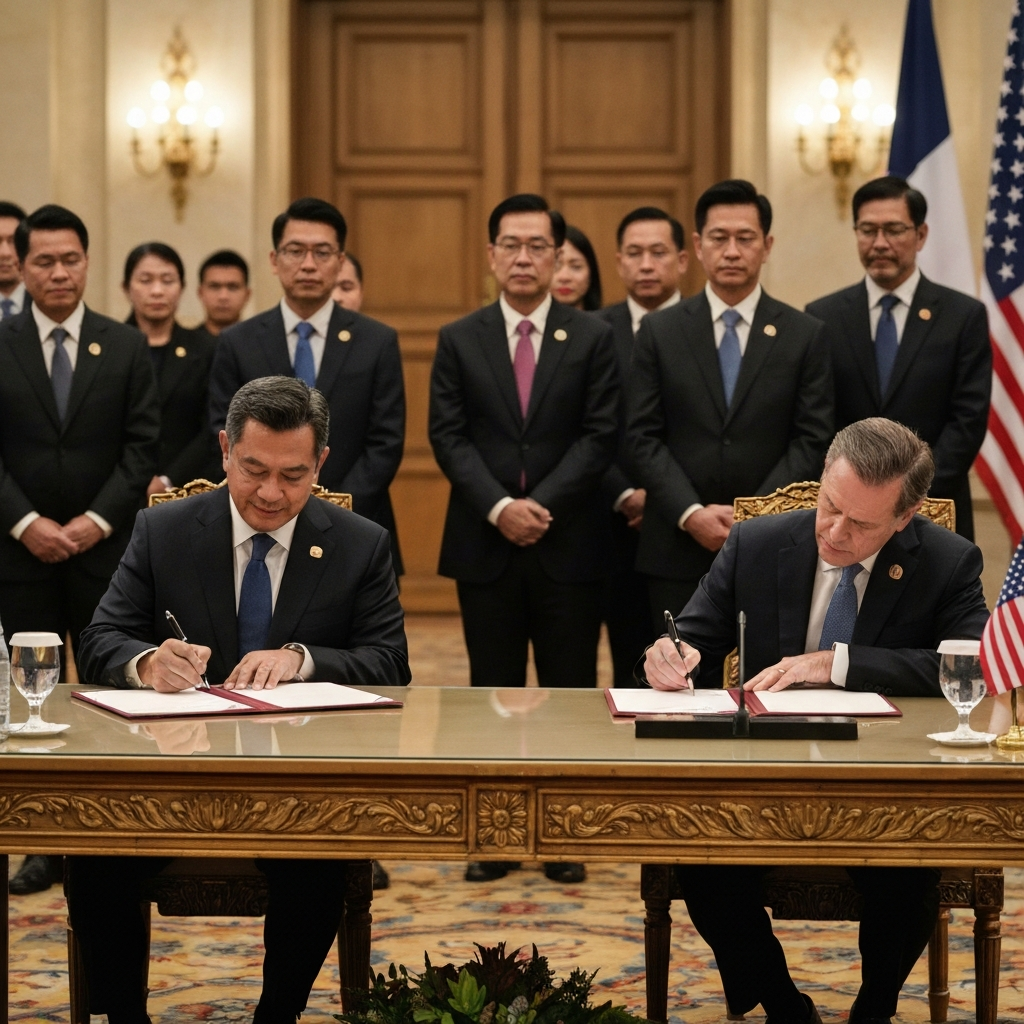
In a significant development for Indonesia’s economic landscape, our nation has entered into a Reciprocal Trade Agreement with the United States, marking a new chapter in bilateral relations. This agreement, signed by President Prabowo Subianto and U.S. President Donald Trump, aims to enhance trade cooperation and mutual economic growth.
Key Provisions of the Agreement
The agreement encompasses several pivotal elements:
- Tariff Reductions: Indonesia will eliminate approximately 99% of tariff barriers on U.S. products, including agricultural goods, health products, and automotive products. In return, the U.S. has set a reciprocal tariff rate of 19% on Indonesian goods, with potential reductions for certain commodities not produced domestically in the U.S. [Source]
- Investment Commitments: Indonesia has committed to investing $33 billion in key U.S. sectors such as agriculture, aerospace, and energy. This includes purchases of resources like coal, petroleum, gas, aircraft, meat, and soybeans. [Source]
- Critical Minerals Cooperation: Recognizing Indonesia’s vast reserves of critical minerals like nickel, the agreement promotes collaboration in extraction and processing, aiming to reduce global dependence on other sources. [Source]
Implications for Indonesia
This trade agreement is poised to have several positive impacts on Indonesia:
- Economic Growth: By opening up U.S. markets to Indonesian products and securing substantial investments, the agreement is expected to stimulate economic growth and create job opportunities.
- Market Diversification: Enhanced access to the U.S. market allows Indonesian businesses to diversify their export destinations, reducing reliance on any single market.
- Industrial Advancement: Collaboration in sectors like aerospace and energy can lead to technological advancements and capacity building within Indonesia.
Opportunities for Local Businesses
Indonesian entrepreneurs and businesses stand to benefit from this agreement in various ways:
- Export Expansion: With reduced tariffs, local producers can competitively export goods such as palm oil, coffee, cocoa, and rubber to the U.S. market.
- Investment Prospects: The influx of U.S. investments opens avenues for partnerships, joint ventures, and access to capital for local enterprises.
- Skill Development: Engagements in high-tech sectors like aerospace can lead to skill enhancement and knowledge transfer for the Indonesian workforce.
As we navigate this new era of trade relations, it is crucial for Indonesian businesses to stay informed and proactive in leveraging the opportunities presented by this agreement. By doing so, we can collectively contribute to the nation’s economic prosperity and strengthen our position in the global market.